
Creating a vibrant and bustling market or medieval bazzar
today we give advice about making a successful market or bazzar for your ttrpg campaign.
The Team at Pencil Sword & Dice
12/31/20252 min read
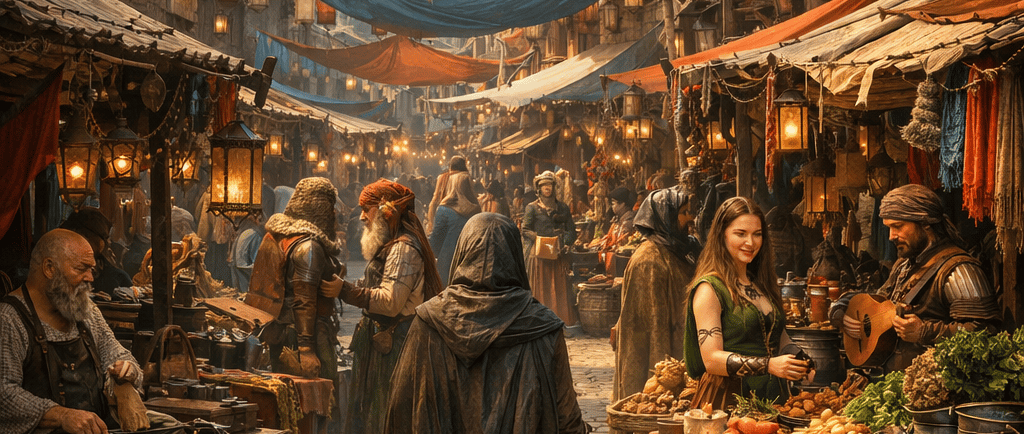
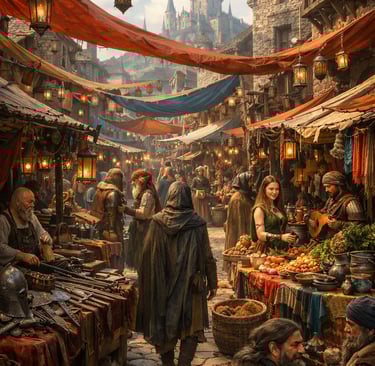
Creating a vibrant and bustling market or medieval bazzar is more than just using random tables. It’s about planing and mapping out the market in a logical way, which is congruent to the lore of the relevant setting. For example the market in the image above shows essentially a long and narrow pedestrian street with various vendors either side. Now think about where you would place relevant vendors. I typically order my markets with urgent vendors i.e. medical aid or nourishment near the entry of the market, then directly afterwards is space for less relevant vendors. In the centre of the market is where I would place my most relevant and anticipated vendors for the adventuring party. If there is a special holiday in the in world calendar offer discounts to the players. Offer further discounts if the players decide to build a friendly repertoire with the store owners. Markets and Bazzar’s should also be a place for random encounters and side quests. A common random encounters is a pick pocket of thief themed encounter. More often then not side quests will be introduced by the vendors of the bazzar, local law enforcers, or via a town notice board.
Another important aspect to consider is sound, smell and crowd density. Markets should feel loud and alive, with barkers calling out deals, animals making noise, carts rattling over stone and the constant hum of conversation. Strong smells of spice, cooked meat, incense or even refuse can help ground the scene and give players something to react to. Use the crowd as both cover and obstacle, chases are harder, perception checks are muddied and social encounters can easily spiral into chaos if tempers flare.
Think about who controls the market. Is it regulated by a guild, a noble house or the city guard, or is it largely self governed by the vendors themselves. This can influence prices, availability of goods and how quickly trouble is dealt with. A heavily guarded bazaar discourages open crime but encourages corruption and bribes, while a loosely policed market may be cheaper but far more dangerous. This also gives you natural factions for the players to interact with, ally with or oppose.
Markets are also excellent places to foreshadow future events. A vendor complaining about supply shortages can hint at war, bandit activity or monsters on trade roads. A sudden spike in prices might suggest political instability or an upcoming siege. Exotic goods from distant lands can tease future locations or cultures you plan to introduce later in the campaign. Even mundane stalls can hide secrets, false bottoms in crates, smuggled items or NPCs who are not what they appear to be.
Finally remember that a market should change over time. Vendors come and go, stalls move, prices fluctuate and familiar NPCs may grow friendlier or more hostile depending on player actions. If the party returns after several sessions, show them the consequences of their choices. A saved merchant might now own a larger stall, a failed quest could result in boarded up shops or increased guard presence. Treat the market as a living part of the world rather than a static shopping menu, and your players will quickly see it as more than just a place to buy gear.